
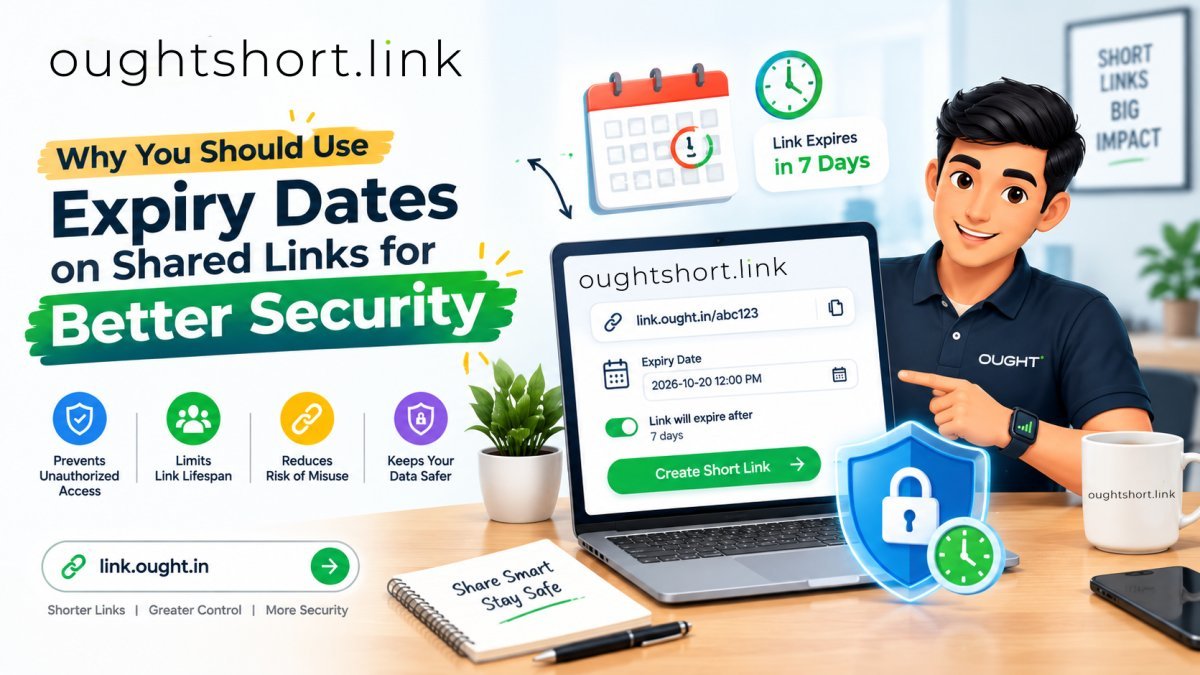
When we share a link online—whether it’s a client proposal, an internal staging environment, a confidential document, or a promotional code—we rarely think about its lifecycle. Once the link is sent via Slack, email, or social media, it tends to live on indefinitely.
In the world of modern digital security, permanence is a vulnerability.
If a link remains active forever, it becomes an open door that anyone can walk through months or even years down the line. That is why smart URL management platforms like link.ought.in prioritize link expiration dates.
In this article, we’ll explore why relying solely on perpetual links is a security risk and how incorporating expiration dates into your workflow can dramatically enhance your digital safety.
The Hidden Risks of "Forever-Active" Links
Most people assume that if a link isn't indexed by Google or shared publicly, it is safe. Unfortunately, cybersecurity threats are rarely that simple. Here are the primary reasons why permanent links pose a silent risk:
1. Link Accumulation and "Forgotten" Assets
Over months of remote work, marketing campaigns, and client collaborations, we generate thousands of short links. Do you remember every single document, folder, or preview link you shared in 2026? When links are left active indefinitely, they pile up in your digital footprint. If an old link contains sensitive information or restricted intellectual property, it remains accessible to anyone who stumbles upon it or crawls historical chat logs.
2. Unintended Forwarding and Access Creep
Links have a viral nature. You might share a password-protected document or a private file with a specific contractor or colleague. However, that person might forward the link to a team member, paste it into a public channel, or leave it in an accessible archive. Without an expiration mechanism, access control quickly spirals out of your hands.
3. Staging and Development Exposure
Developers and designers frequently use short links to share work-in-progress websites, design mockups, or staging environments with clients. If these testing links do not expire, they can remain searchable or vulnerable to automated web scrapers, potentially exposing unfinished codebases, credentials, or proprietary branding before official launch.
How Expiry Dates Solve the Security Gap
Implementing expiration dates transforms your shared links from static, permanent vectors into dynamic, self-destructing assets. Here is how they protect you:
- Enforced Principle of Least Privilege: Security best practice dictates that access should only be granted for as long as necessary. Link expiration automates this principle. Once the project or meeting is over, the link naturally ceases to function.
- Mitigating Data Breaches: If a chat history or email inbox is ever compromised by a bad actor, any expired links within those archives are rendered completely useless, choking off potential entry points.
- Peace of Mind for Collaborative Work: Whether you are sending financial reports, legal agreements, or time-sensitive promotional campaigns, you can rest easy knowing the content won't remain accessible a week after the deadline has passed.
Best Practices for Using Expiry Links on link.ought.in
To get the most out of link expiration features, integrate these simple habits into your daily digital hygiene:
Match Expiration to Context:
- Quick client reviews: Set expiry to 48–72 hours.
- Short-term campaigns: Set expiry for the exact end-date of the event or promotion.
- Internal archives: Use moderate expirations (e.g., 30 days) and renew them only if active collaboration is still required.
Combine with Descriptive Aliases: Pair your expiration rules with clean custom slugs on link.ought.in so you can easily track which asset belongs to which project.
Audit Your Active Links: Regularly review your dashboard to clean up or adjust links that no longer need to be active.
Secure Your Digital Footprint Today
Security isn't just about complex passwords and two-factor authentication—it is about controlling every single touchpoint where your data interacts with the outside world. By taking control of your link lifecycles, you eliminate dormant vulnerabilities before they can be exploited.
Ready to take control of your links? Head over to link.ought.in today to create smarter, safer, and self-expiring links in seconds.


0 Comments
Be the first to comment.
Leave a Comment